Who's Side Is The Shorewood City Council On? Team Resident or Team Developer? We're About to Find Out.
Updated: Feb 8
Is the City on the side of developers who want to make a quick buck at the expense of neighbors and Shorewood's character and natural assets or on the side of residents and the city? We'll soon know.
Team Resident or Team Developer? We’re About to Find Out.
On Monday, the Shorewood City Council will show us who they really work for: residents and our city’s natural assets—or developers looking to make a fast buck.
They’ll be considering one of the worst development proposals in recent memory: the Watten Ponds project.

This project would wipe out a rare and valuable natural area to build two extremely large, extremely expensive houses. In the process, it would dramatically increase flooding risk for nearby neighbors and create costly problems down the road—problems that we, the taxpayers, will be asked to fix.
We’ve seen this movie before. It doesn’t end well.
The Council’s Excuse—and Why It Doesn’t Hold Water
The City Council claims their hands are tied. They say they can only look at narrow technical issues like setbacks and street access—not environmental damage, flooding risks, or impacts on neighbors.
That’s convenient. And it’s wrong.
City law is clear: the Council can and must evaluate whether a project aligns with the City’s Comprehensive Plan. And that plan explicitly prioritizes protecting natural resources. The City Code also requires consideration of flooding risk and broader impacts - we know the overall development results in much more flooding risk than the developer claims but the City wants to ignore that.
Pretending otherwise isn’t legal caution—it’s a cop-out.
If the Council refuses to do a real review, they aren’t being neutral. They’re siding with the developer. Not reviewing the project effectively greenlights it, without the courage to say so out loud.
We’ve Paid for This Mistake Before
Remember Strawberry Lane?
Taxpayers shelled out $6 million to fix problems caused by development decisions where the City ignored the bigger picture. That wasn’t ancient history. It was a direct result of exactly this kind of thinking: “Let’s just check the boxes and hope it works out.”
Why are we lining up to do that again?
Trick us once, shame on you. Trick us twice? That’s on the City Council.
If Watten Ponds Isn’t Worth Protecting, What Is?
If Watten Ponds isn’t worth protecting—its unique ecosystem, its neighbors, its long-term impact—then nothing in Shorewood is.
Yes, a real review takes effort. It means Council members have to think carefully, go on the record, and accept accountability. It means saying publicly whether they’re Team Resident or Team Developer.
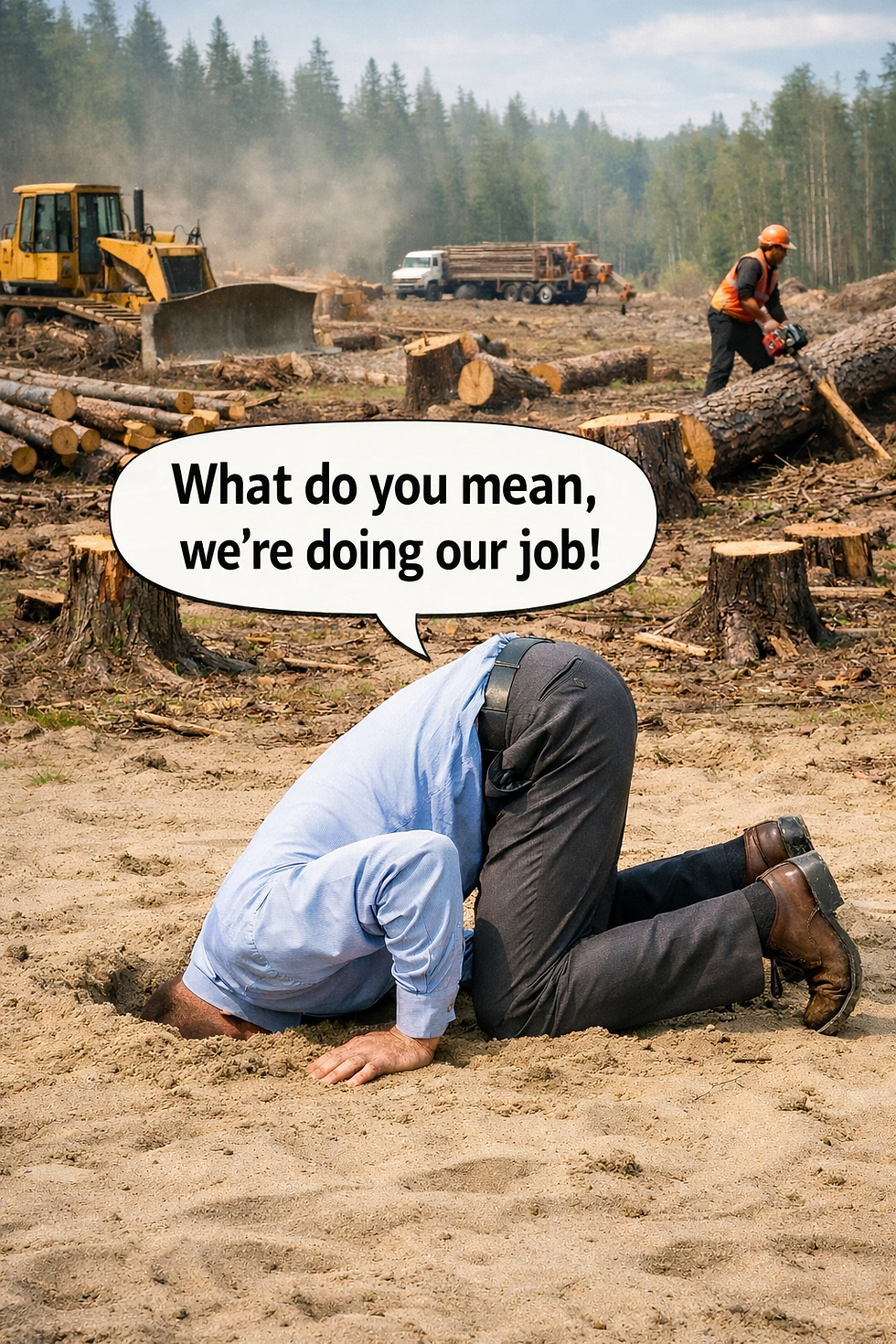
Avoiding that choice may be easier. But sticking their heads in the sand is the worst possible approach—and it’s not what residents elected them to do.
Because once this land is gone—and the flooding starts—we won’t get a do-over.
What You Can Do
Let the City Council know where you stand. Tell them you expect them to protect residents, neighborhoods, and natural resources—not rubber-stamp bad projects.
Be loud. Be clear. Be Team Resident.
Learn more below:
Why This Land Is a Unique Natural Asset
This is not typical residential land. A professional urban forester has identified the site as a remnant of Minnesota's historic Big Woods ecosystem—a native deciduous forest reduced to an estimated 2–5% of its historic range statewide. The parcel contains a "unique" assemblage of both major and minor Big Woods species—Bur Oak, Sugar Maple, Basswood, Ash, Bitternut Hickory, American Elm, and Ironwood—with an intact understory and natural buckthorn resistance (Exhibit ). As the expert opined, "it will be impossible to replace these mature and diverse grove of trees once removed." The destruction of a Big Woods remnant is irreversible.
The Big Woods remnant does not exist in isolation—it functions as part of a larger habitat complex. Development would fragment this area, creating ecological harm that is much greater than the acreage directly disturbed. Scientific literature documents that habitat fragmentation causes cascading ecological effects: increased edge effects, invasion by non-native species, disruption of wildlife movement corridors, and loss of interior forest conditions required by sensitive species
Harm to Our Waters
The Big Woods remnant currently provides critical ecological services that protect downstream water quality:
Mature tree canopy intercepts rainfall, decreases soil erosion, reducing runoff volume, velocity and turbidity
Forest floor leaf litter and intact understory filter sediments and absorb nutrients and likewise decreases soil erosion keeping intact native soils and vital nutrients to feed trees and other native vegetation
Deep root systems promote infiltration and groundwater recharge
Wetland vegetation provides additional nutrient uptake and filtration and significantly decreases these nutrients leaching into stormwater runoff and ultimately entering Lake Minnetonka
The proposed development would eliminate these natural water quality protections and replace them with impervious surfaces (roofs, driveways) and managed lawns. Residential development is a known source of nutrient pollution from lawn fertilizers, pet waste, and vehicle residues. Directing this nutrient-laden runoff through a degraded wetland system to an already nutrient-impaired lake creates potential for significant cumulative water quality effects.
Flooding
The project also creates significant flooding risks, and because the developer is piecmealing the project, it avoids required flooding prevention. We know how this ends - it's Strawberry Lane again, with the taxpayers left with a $6 million bill to fix flooding caused by bad development practices, that's almost $3,000 for every Shorewood household, all so the developer doesn't have to pay it. Have we not learned that lesson?
Mosquitos
It might not be obvious but healthy wetlands significantly reduce mosquitos by hosting predators that can't survive otherwise. Research shows up to a 70% reduction in mosquitos in areas with healthy wetlands. Degrading these wetlands means a lot more mosquitos - and a lot more chemicals to try to control them, chemicals that end up in your drinking water and in the lake where you swim.


Comments